This is crossposted from the League of Extraordinary Writers
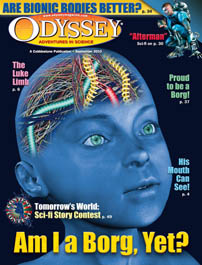 This month’s issue of ODYSSEY, a science and science fiction magazine for tweens and teens, has a decidedly dystopian flavor. The theme is “Am I a Borg, Yet?” The short story for the issue is about “cyborgs with dangerous agendas.” (How can you not love that?)
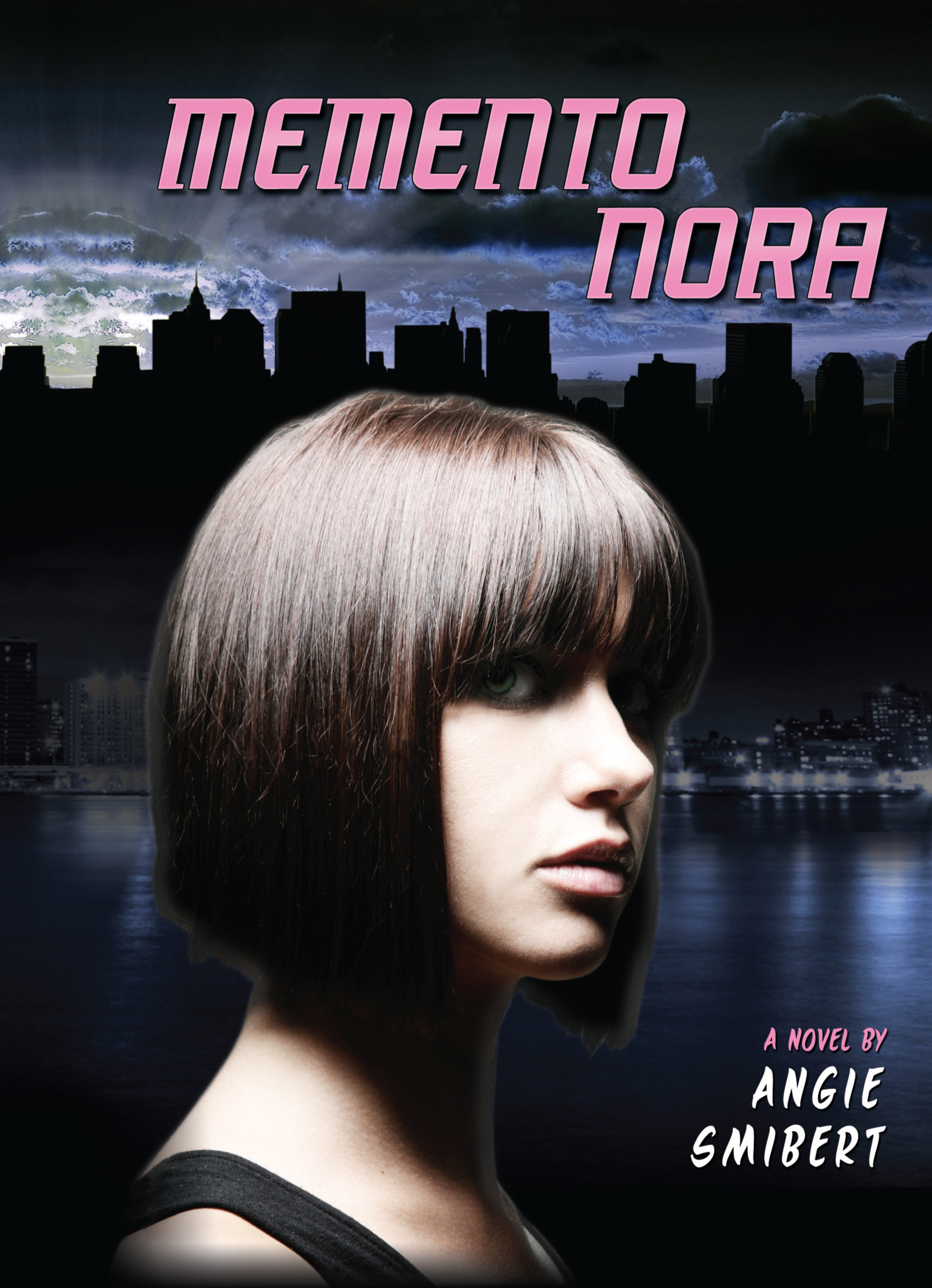
Elizabeth Lindstrom, the editor of ODYSSEY, has graciously allowed me to pick her brains about what she looks for in a story and what her readers like. I’ve had the pleasure of working with Beth on many occasions. In fact, my novel, MEMENTO NORA, grew out of a short story of the same name published in ODYSSEY several years ago.
So, first a little about Beth.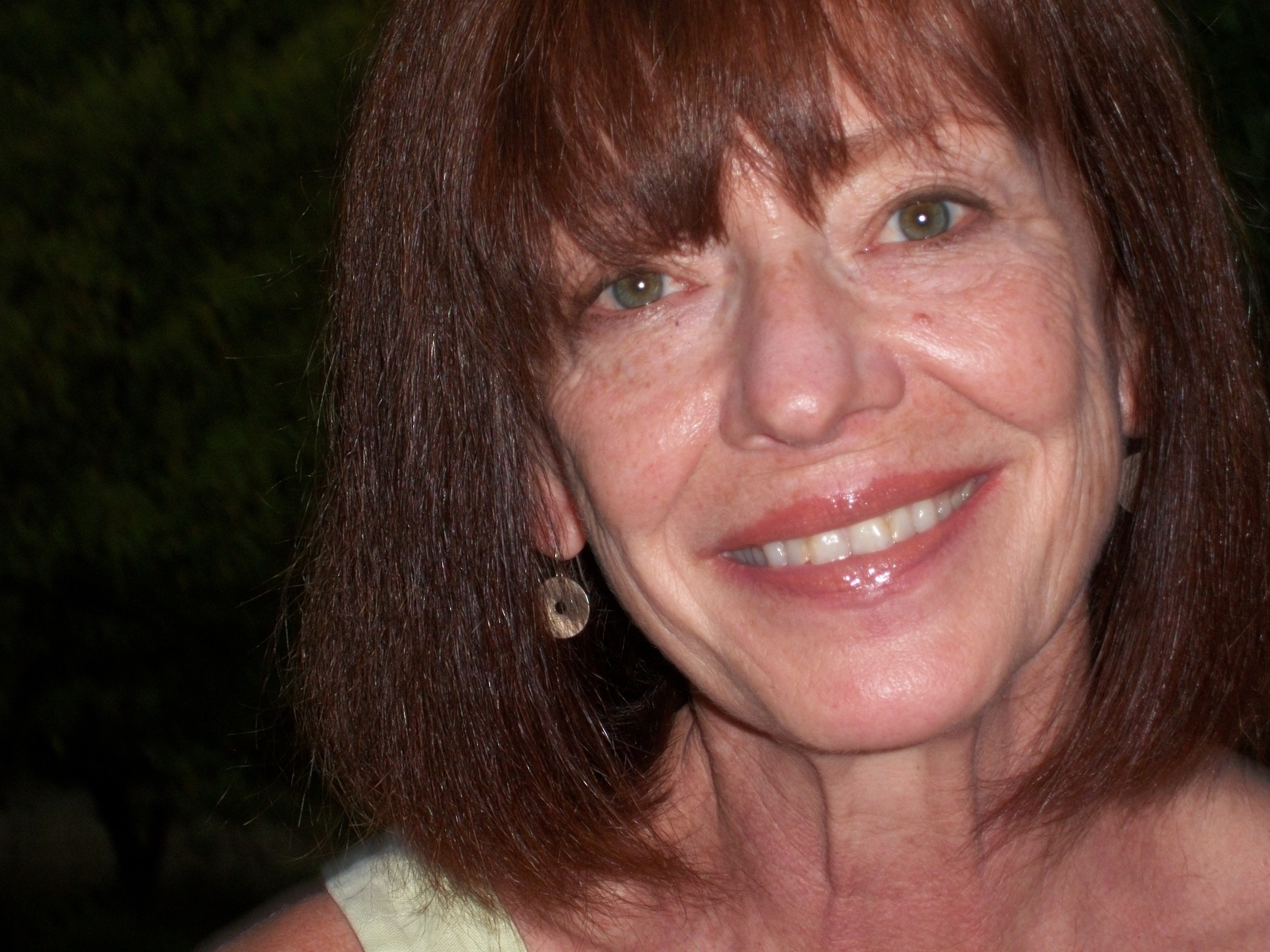
Elizabeth Lindstrom is a senior editor at Cobblestone Publishing, where she edits the award-winning children’s science magazine ODYSSEY. After graduating from University of New Hampshire with a master’s degree in English, she worked as a newspaper reporter and features writer. She is the recipient of the New England Press Association award for investigative reporting, the New Hampshire Press Association award for social services writing, and numerous Educational Press Association and Parents’ Choice awards. Before coming to Cobblestone, she taught non-fiction writing at Saint Anselm College.
Welcome, Beth. Tell us a little about ODYSSEY. Who are your readers?
ODYSSEY is a science and technology magazine aimed at kids 10 to 16 years old. It has an edgy tone and an artsy look. In reality, some precocious 8-year-olds read it, and I know a lot of adults who enjoy it too. But when planning the issue, I target a bright 12-year-old whose parents want him/her to be exposed to the real world. The magazine includes articles, activities, and interviews for science junkies, but it also includes soft science pieces, beautiful art, and fiction to lure those kids who might not otherwise pick up a science magazine. Our monthly fiction feature is only several years old, but it is very popular with readers.
What’s your role?
I pretty much determine what you’re going to see and read in the pages of ODYSSEY each month and what will be on its cover. I select the theme each month, assign and edit the articles, do the photo research, and select the illustrators. I work with Jim Fletcher, a very talented designer.
What do you look for in a story?
I’ll list my criteria:
- Believable characters who are memorable and approachable even if they aren’t supposed to be likeable.
- Dialogue that really has a voice, one that is suitable for our readers.
- Threads of good science that anchor the story.
- A consistent setting – one that doesn’t leap into the future and then sound retro because of its details.
- A plot that is neither too light nor too dark.
- A meaning that lingers with a reader after they read the last line.
What have been some of the most popular themes, articles, and/or stories? In other words, what do your readers really love?
Well, the theme of our most popular issue of all time was “Poop – What a Waste!” I guess that’s not surprising because kids love yucky things. “Is It Science or Art” was also a very popular theme, which seems to counter what I just said. Issues on crime scene science, killer viruses, and extreme science are also winners. Einstein, Feynman, and Goodall were popular biographical-themed issues. I don’t have a sense of a particular story being especially popular. I get letters from readers saying they love to read the story in each issue and see how it is connected to the science in the same issue. I think that is great because it shows readers that there is a link between science and art.
What can we expect in the September (aka, Am I a Borg, Yet?) issue?
The issue is out. You can sample it on our Web site odysseymagazine.com. It includes both bionics for restoration and bionics for enhancement, and deals with the many ethical issues of a world filled with hybrid humans — when we are part flesh and part steel. How soon will it happen? Should it happen? The issue includes the story “Afterman” by Zareh MacPherson Artinian, which explores a dystopian world filled with cyborgs with dangerous agendas.
Why this theme?
As I said in my editor’s note for the issue, humanity and technology are right now, and will continue in readers’ lifetimes, forging a powerful new relationship. It is important that we consider this exciting leap very carefully. We can’t let being a cyborg seem too romantic. An article in the issue called “The Human Enhancement Revolution!” looks at what has been called “the most important controversy in science and society this new century.” “Am I Borg, Yet?” is definitely a good theme for ODYSSEY.
Thanks, Beth!
You can order an issue or a subscription of ODYSSEY here. If you’re interested in writing for Odyssey, check out the submission guidelines.